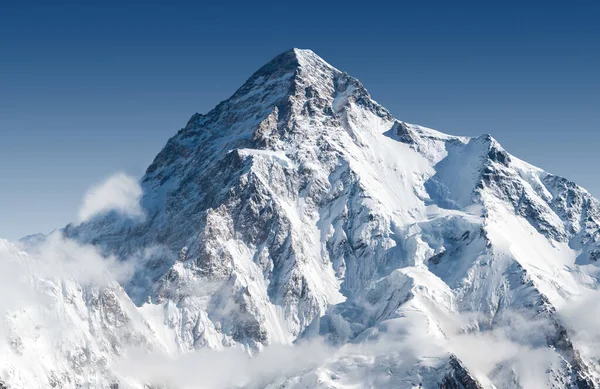

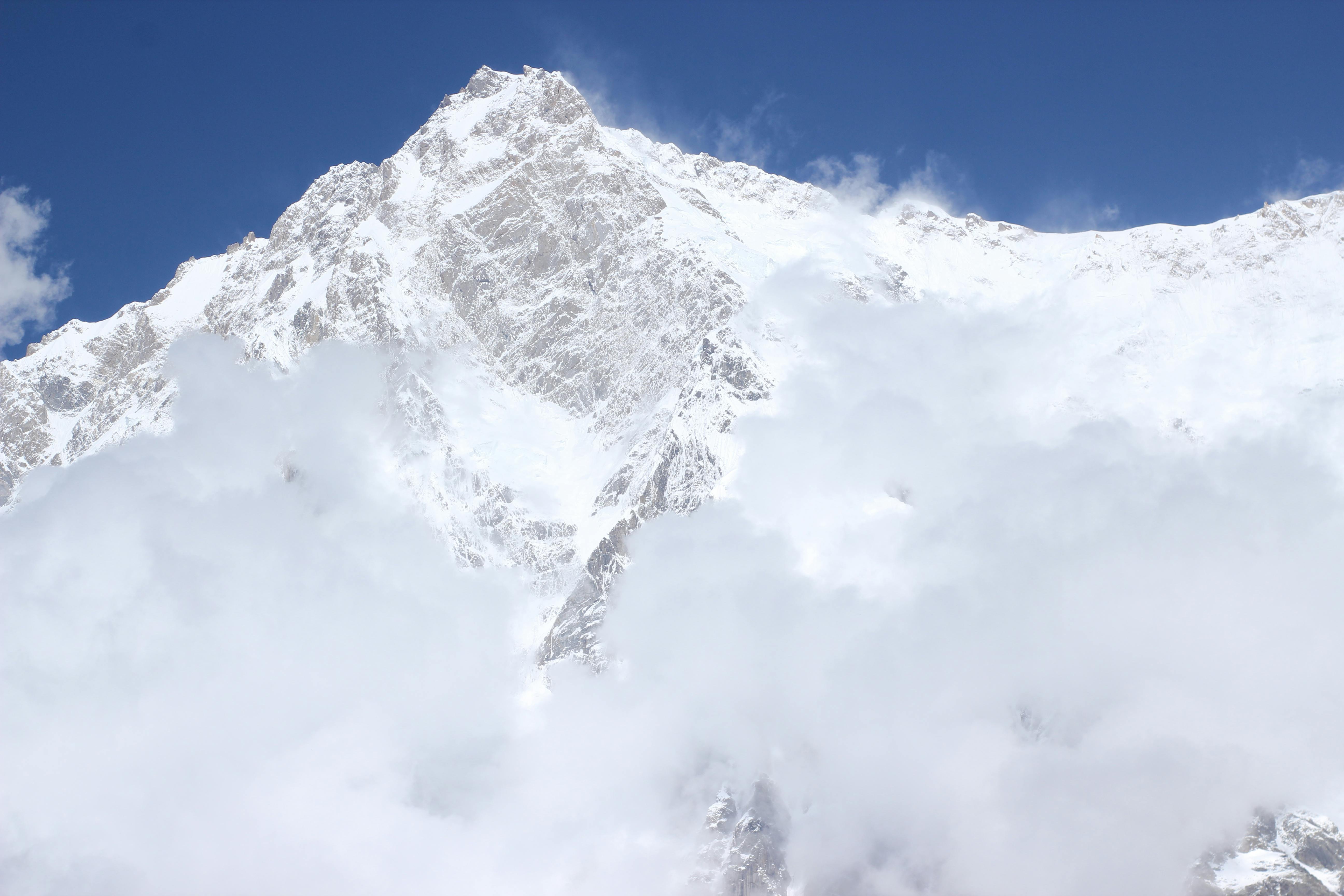
Embark on the thrilling Gasherbrum I Expedition 2025/2026, an unforgettable journey to one of the most magnificent peaks in the Karakoram Range of Gilgit-Baltistan, Pakistan. Known globally as “The Hidden Mountain,” Gasherbrum I (8,080m) stands as the eleventh-highest mountain in the world, forming part of the spectacular Gasherbrum Massif in the remote Shigar District.
The name Gasherbrum is derived from two Balti words — “Rgasha” (beautiful) and “Brum” (mountain) — which together mean “Beautiful Mountain.” Contrary to its English name “Hidden Mountain,” the local name celebrates its awe-inspiring natural beauty and spiritual significance.
History and First Ascent
The Gasherbrum Massif was first explored in 1934 by a Swiss-led international team headed by Günter Oskar Dyhrenfurth. Although they couldn’t reach the summits of Gasherbrum I (G1) or Gasherbrum II (G2), their expedition paved the way for future climbers.
The first successful ascent of Gasherbrum I (G1) came on July 5, 1958, when Pete Schoening and Andy Kauffman, members of an eight-man American expedition led by Nicholas B. Clinch, reached the summit.
The mountain was initially discovered and named K5 by British surveyor Thomas George Montgomerie in 1856, during The Great Trigonometric Survey of India, identifying it as the fifth peak in the Karakoram Range.
In 2013, Broad Peak was successfully climbed in winter for the first time by Maciej Berbeka, Adam Bielecki, Tomasz Kowalski, and Artur Małek. Sadly, two climbers — Maciej Berbeka and Tomasz Kowalski — lost their lives during descent due to extreme weather, marking both triumph and tragedy in Broad Peak’s mountaineering legacy.
Standing at 8,080 meters, Gasherbrum I offers one of the most rewarding yet demanding mountaineering experiences in the world. Climbers are treated to breathtaking views of Baltoro Glacier, Muztagh Tower, Masherbrum, Broad Peak, Gasherbrum IV, and the mighty K2.
Best Time for the Gasherbrum I Expedition 2025/2026
TThe best time to climb Gasherbrum I (G1) is during the summer months of June,July and August, when weather conditions are relatively mild and more stable. Most successful ascents have taken place during this period.
However, the mountain has also witnessed historical achievements in extreme conditions. The first winter ascent was completed on March 9, 2012, by Polish climbers Adam Bielecki and Janusz Gołąb, without the use of supplemental oxygen — a feat that remains one of the greatest milestones in Himalayan mountaineering history.
Support & Logistics:
We provide fully guided all expeditions with expert guides, Sherpas, and complete logistics — from arrival in Islamabad to base camp and summit.
For International Climbers:
We offer custom All trekking and expedition packages for individuals and groups worldwide, ensuring safety, comfort, and a once-in-a-lifetime adventure.
- Services included for both International & local trekkers
- Implementation of government SOPs/Guidelines in case of new pandemic variants
- Domestic flights (20kg baggage + 7kg hand carry)
- Airport & road transfers
- Hotel accommodation (twin sharing)
- Trekking tents & camping logistics
- Licensed professional trekking guide
- Snacks, dry fruits, and boiled water refills
- Support staff (cook, porters, assistants)
- Waste management & environmental fees
- Skardu city tour with entry tickets
- Baggage storage service in Skardu
- Basic first aid kit & emergency satellite phone
- Permit & Liaison fees
- International flight
- Pakistan visa (support documents provided)
- Travel insurance & rescue services
- Personal trekking & climbing gear
- Extra hotel nights in Islamabad
- Additional baggage or overweight items
- Tips for staff, porters & guides
- Personal expenses (laundry, phone, souvenirs etc.)
- Early return or force majeure costs (weather/natural causes)
Duration: 50 Days
Max Altitude: 80,80 m